Computer art

08.10.2013 BY ARIE ALTENA

T.V.C. 20 68179 71, 1971.

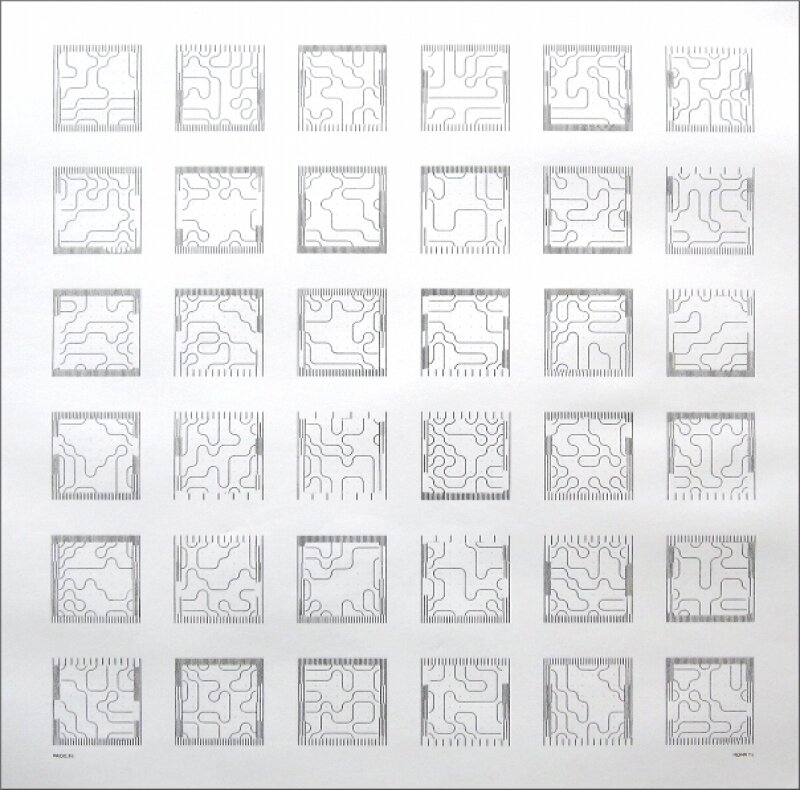
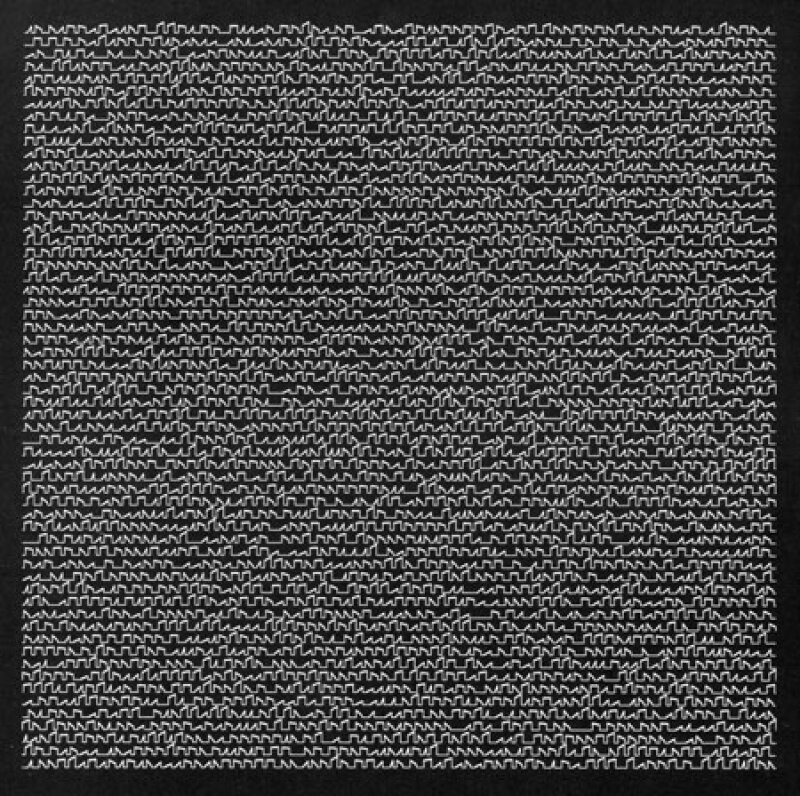
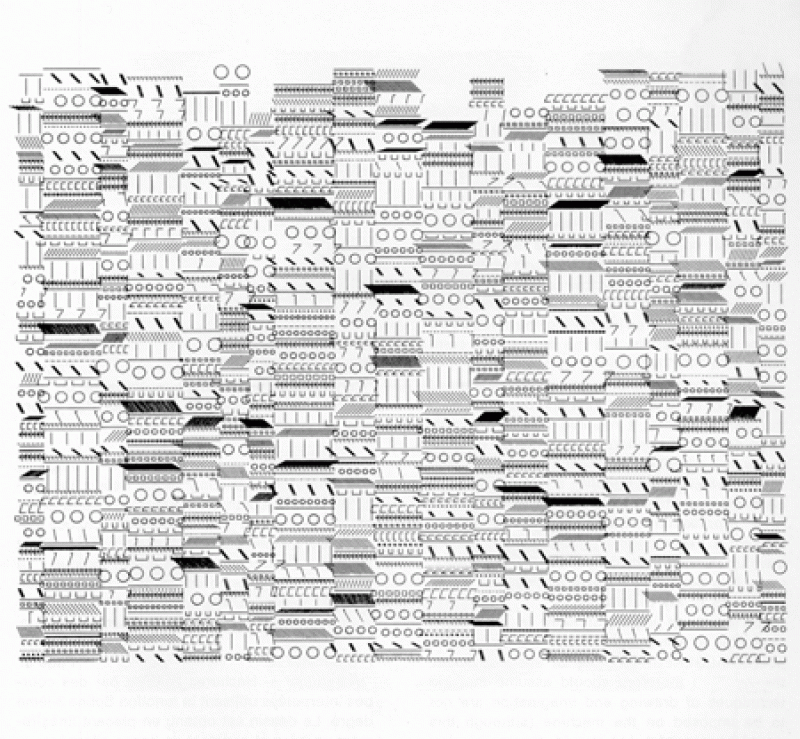
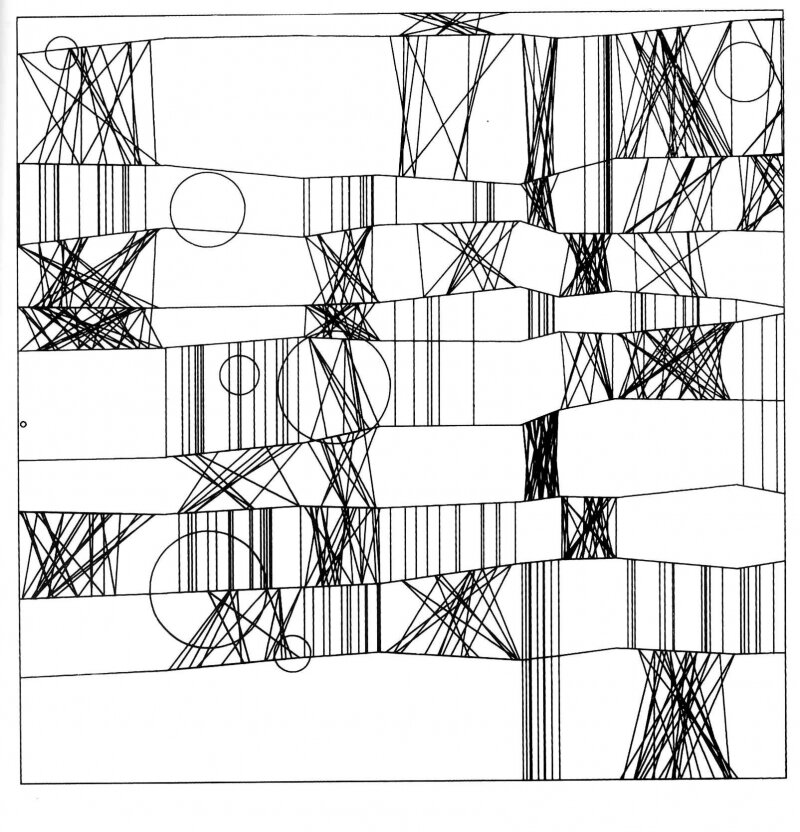
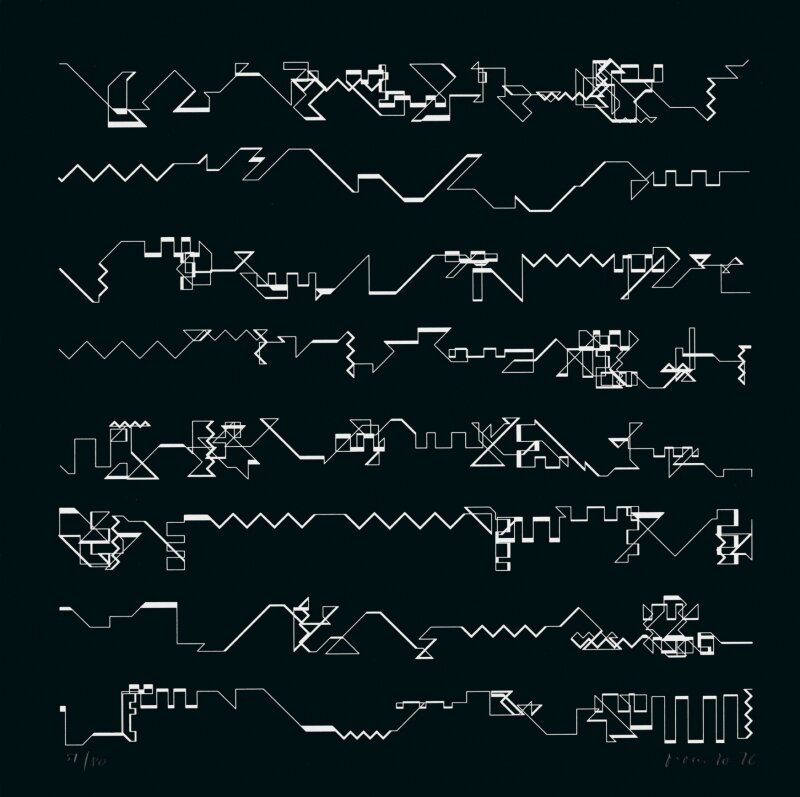
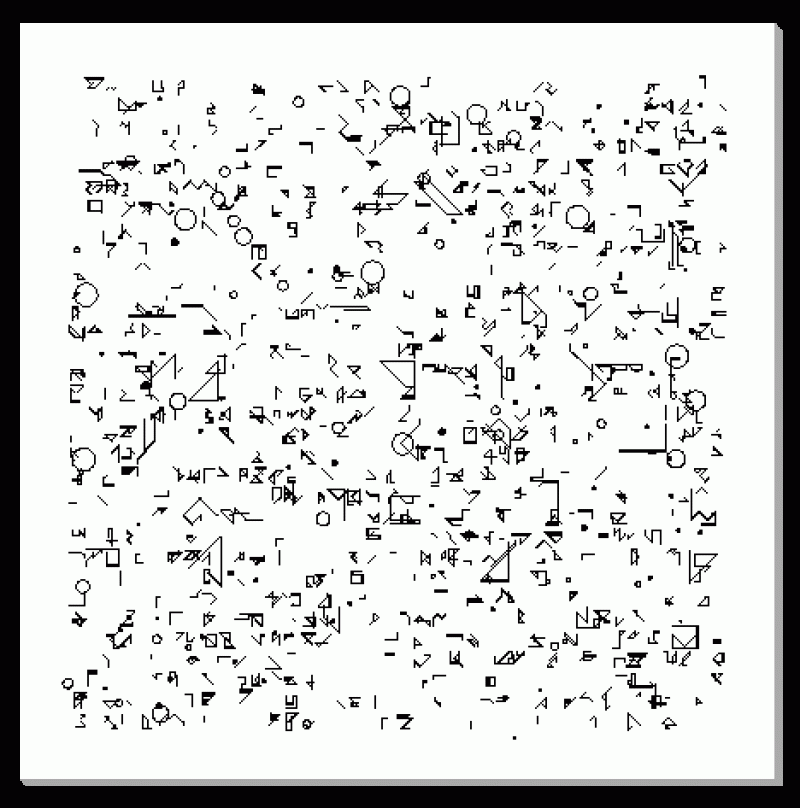
During the fifties and sixties of the last century, the first pioneers in digital art used computers to realize their visual experiments to create algorithmic art. They would write computer programs, otherwise known as algorithms, to generate images, usually by using advanced programming language such as COBOL or Fortran, but also by using machine language. They would often work in the dead of night, whenever a university or research institute would grant them a few hours to make calculations on their expensive IBM-mainframes. These computers were built for computing punch cards, which meant that using them to make visual art became an abstract and mathematical procedure that called for the formulation of rules to determine the construction of an image. The computer carries out the algorithm after which the output is made visible on a plotter (a drawing machine) connected to the computer.

Cubic Limit, plotter drawing, ink on paper, 1977

Artists in this field of visual computer art, such as Ben Lapofsky, Lilian Schwartz, Frieder Nake, Manfred Mohr, Edward Zajec and Vera Molna, were strongly influenced by cybernetics and closely linked to the informational aesthetics developing during that time. It became evident that composing algorithms that performed repeatedly to produce the same image was not particularly artistically interesting, however valuable this development would appear for the later advancement of computer graphics. Much more interesting are the algorithms that, when repeated, produce different results. Although the first generation of computer artists created an output of unique plotter drawings, their main artistic interest lies in fundamental research into composition. They also touch upon complex questions concerning the essence of the artistic practice, by often bluntly addressing the question of authorship with computer generated plotter drawings. The question, what is art, is approached conceptually through an algorithm that automatically spits out one unique drawing after another, as though produced on a factory assembly line. Generally, the question was answered by assigning authorship and artistry to the actual formulation of the algorithms. The construction of algorithms for artistic purposes was seen as a scientific form of visual research that opened up a new stage for the development of art.
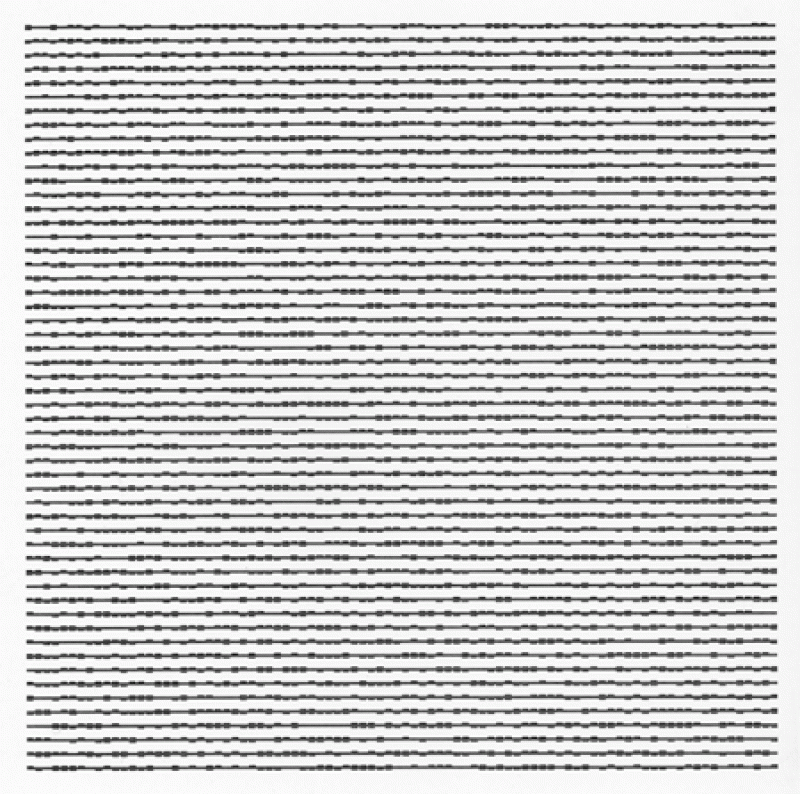
P148, “inschrift”, plotter drawing ink on paper, 50cm x 50cm, 1973

The works made by these pioneering computer artists is closely linked to the avant-garde movements of the sixties (like GRAV, de Groupe de Recherche d’Art Visuel), and conceptual art. After all, Joseph Kosuth and Sol Lewitt likewise made works that consisted of formulations. Indeed, the end of the sixties saw a short-lived convergence between computer art and conceptual art. The computer artist’s attitude towards technology was incomprehensible to those involved in conceptual art and classical art criticism, and was to some even suspect. Nevertheless, many computer artists (like Frieder Nake) were even more radical in their rejection of the bourgeois art system than the conceptual artists, who were operating within the galleries and museums.
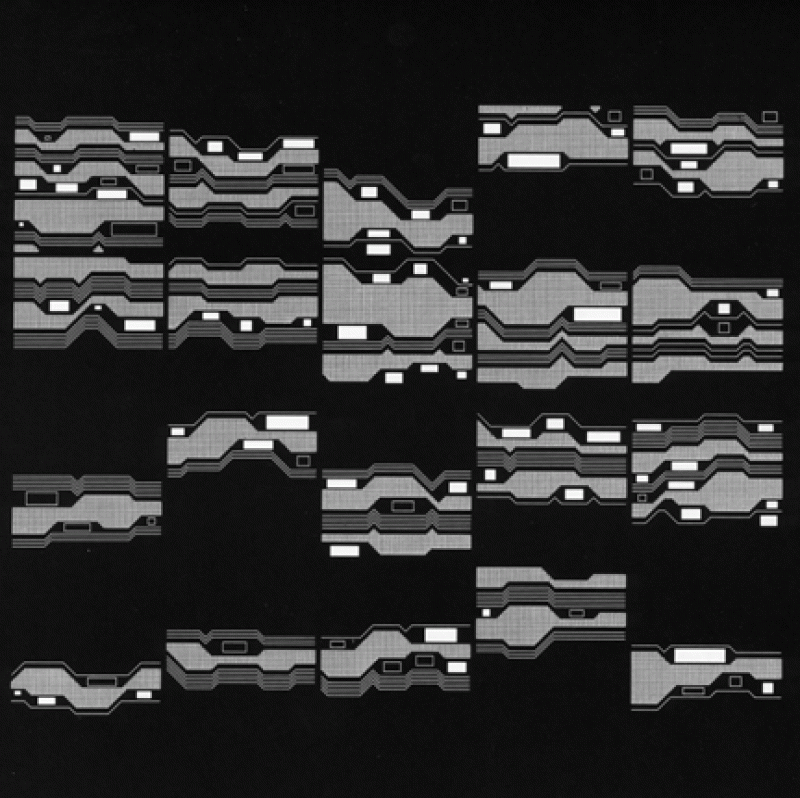
P-133, “cluster phobia”, plotter drawing ink on paper, 50cm x 50cm, 1972

The innovations made by the first generation of computer artists are simple when compared to what’s possible now, fifty years later. But their experiments laid the foundation that makes the prefab box of tricks possible. What’s more important – for art, that is – is that the computer artists also pioneered in the exploration of conceptual questions that still remain fundamental for computer art.
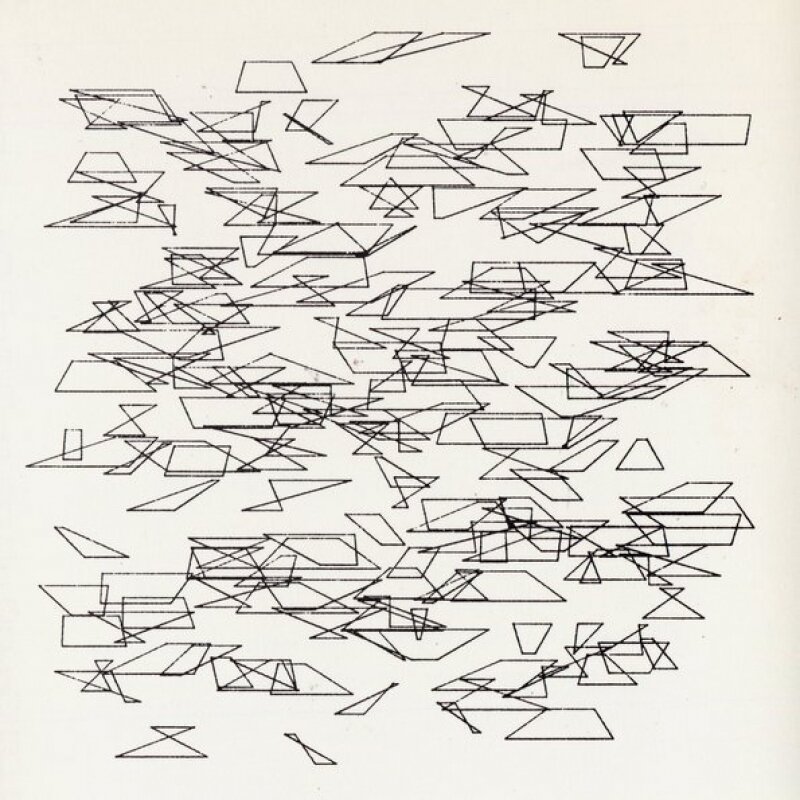
144 Trapèzes (16 variations), plotter drawing, ink on paper, 20×25 cm, 1974

P91, 1971, plotter drawing, ink on paper, 50 x 50 cm

P-122, “scratch code”, plotter drawing ink on paper, 50cm x 50cm, 1972

P-71, “serielle zeichenreihung”, plotter drawing ink on paper, 40cm x 50cm, 1970

T.V.C. 20 68179 71, 1971.

Quadrate, 1969/1970.

Plotter drawing, ink on paper, 1965

51/80 Scratch Code, 1970-1975.

P-050/R, “a formal language”, Ink/paper/wood, 1970, 100cm x 100cm

A List

20.07.2014 BY JIGNA UMERIA

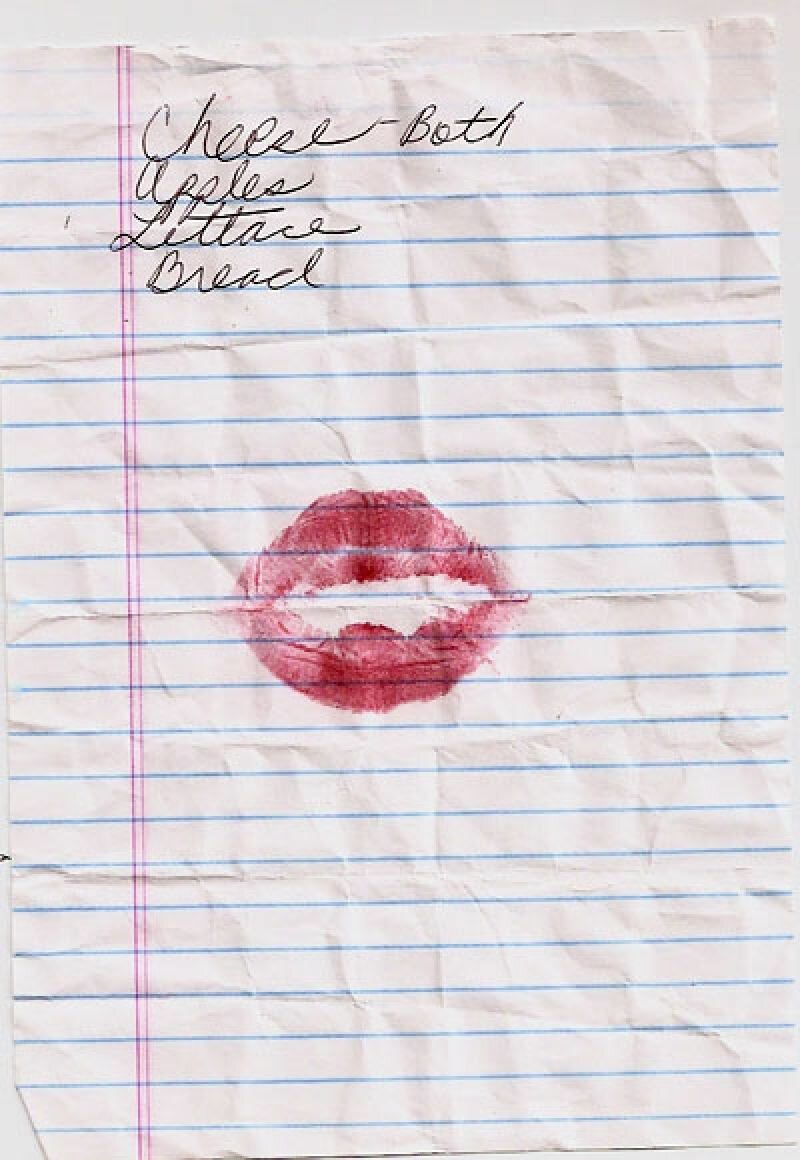
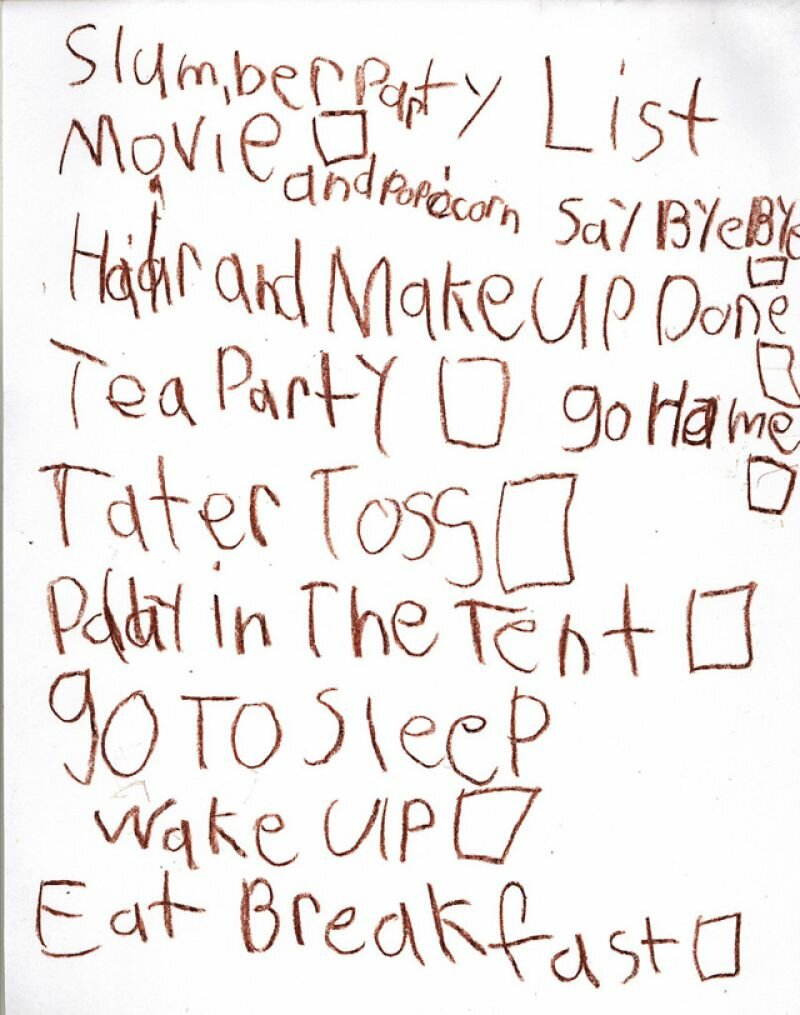
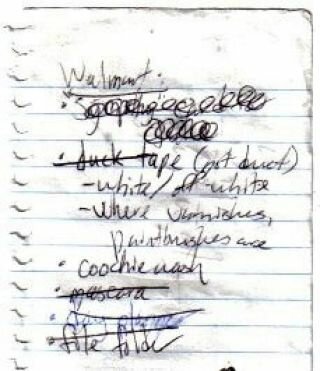
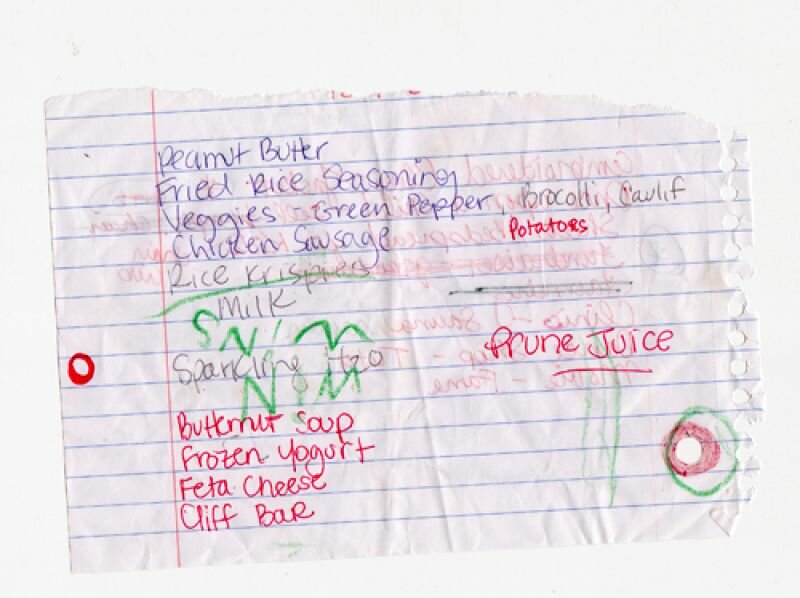
As entries, strike-throughs, spelling mistakes, re-entries, question marks, lists within lists, bullet-points, dashes, personalised bullet-points, squares, asterisks, circled entries, bold entries, ambitious entries and already-done entries are scattered across the page, the mind moves quicker than the pen to create this masterpiece in its initial form. Margins, the bottom of the list or the space in between the lines are an opportunity to add information that could not keep up with the mind or that were simply forgotten. At times, these secondary entries will appear in a different colour where an alternative writing tool has had to be used.

The creator of a list has no intention to design their thoughts but merely to order them visually in tangible form. The back of a card, an old envelope, some scrap paper, a notebook, a smart phone, a saved email draft, a train ticket or a post-it note provide the canvas for this mind montage to be drawn out.

The activity of list-making is both common to all yet entirely individualistic.There is a sense of urgency attached to something that is created on-the-go or in between activities and maybe it is the extent of this pressure that when making a list, normal writing conventions are ignored. Baselines are misused, words are written across them rather than on them; the ascenders on letters become muted; the descenders have added flamboyancy and the margins are no longer a no-go area for words but a place to fill with words, additional thoughts, numbers, sketches and question marks.

In a moment’s pause, a second thought is given to putting these thoughts into better order or form, perhaps in order of priority or alphabetically.This can be done at a later date. Sometimes, a complete re-draft of the list might be necessary. If it is a list of that type it can be prepared to make sense to others. It is at this point a design element might be added: colour coding, font selection, margin widths and line lengths.

There is an unspoken hierarchy to the various forms of lists that surround us in our daily lives.Train times, shopping lists, gift lists, hate lists, wish lists, to-do lists, today’s food specials, contents pages, registers, stock lists, missing lists, menus and guest lists. The different forms of lists are matched and paired with a tried and tested format. Registers are done alphabetically; shopping lists by memory, train times chronologically etc.

When a list finds itself in the hands of someone other than its author, different aspects of it might be scrutinised. The graphologist looks at the space between the lines and the curves or flicks of the letters, the size of the capital letters, the margins around the texts and the slant of the handwriting. The artist dreams up the story that precedes the list and what might follow. The curious looks around to find its owner. And others disregard it.

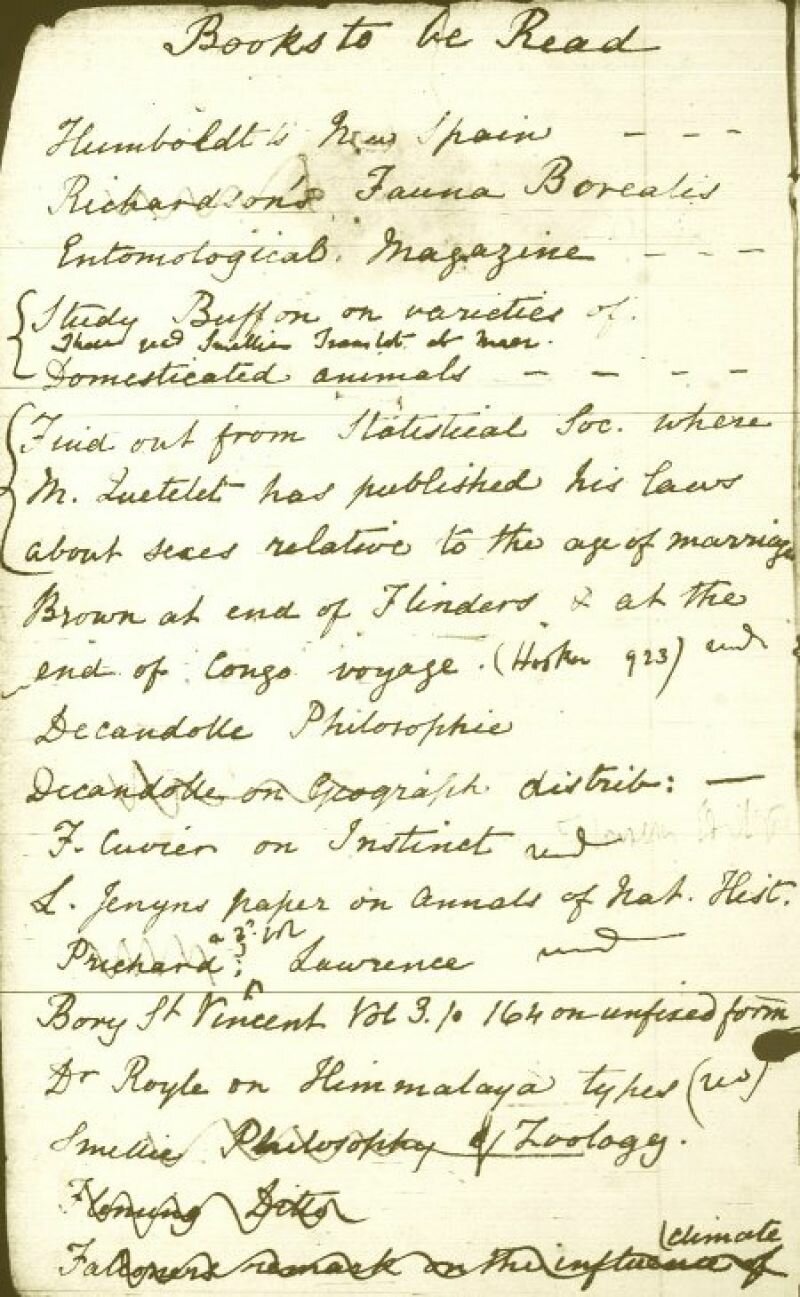
When an individual has shown extraordinary qualities or talents, the contents of a list they have made might become valuable to others. The lives of great scientists, musicians, actors, writers or designers are retraced and dissected by making their diaries or notebooks public. Whilst the content of their home is on show so is the content of their minds. Private information, messily scrawled across the page with changes and errors, supposedly give insight into a frame of mind. A laundry list suddenly reveals secrets of their lifestyle, an unseen side to their character.

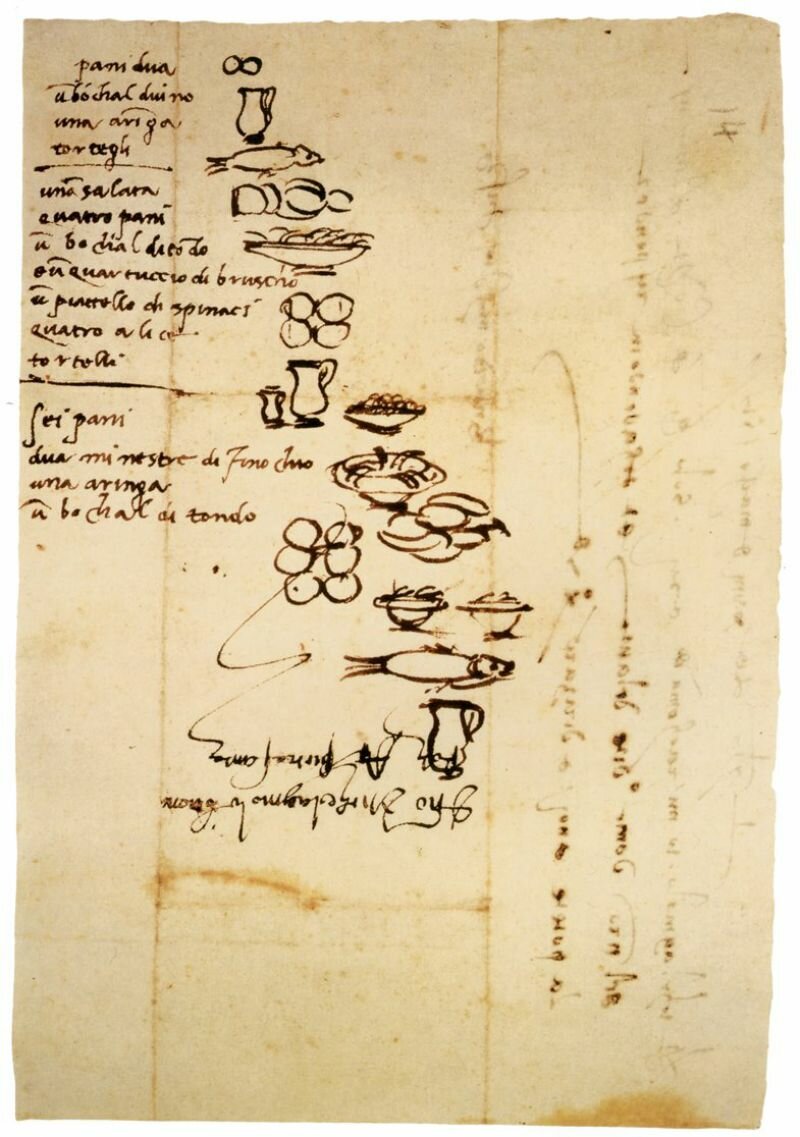
Michelangelo’s menu list

This information, analysis, format, or story is irrelevant to the author; the content is what is of interest to them. Their document is plagued with encryptions of coding, different methods of ‘crossing off’, ticks, strike-throughs and circles around ticks. Only some entries have numbers, where clearly an attempt at prioritising has been made. Some have dates next to them, for deadlines and finales, giving an added importance, a ticking reminder. These juxtapositions need not make sense to others.

Having been created, a list triumphantly sits at the top of important papers. It is versatile and can be used as a bookmark, a coaster or a space to sketch; it is embellished with important things, mustn’t forgets and mental notes. It ages well. Every mark on this creation is part of its existence. Folds in the page create creases across the unused printed lines; they battle with the thoughts sprawled across them. A new dimension is added to the form where the author has rolled the corners back and forth between their fingers.

A list by Charles Darwin

At the height of its usability, the list holds authority over its creator; unchecked items glare at you and make you feel guilty for the things you have not yet accomplished. A mutual resistance grows and other lists arise. Before the list has peaked it finds itself at the bottom of a bag, on a supermarket floor, wedged in a shopping basket, slotted in the corner of a sofa stuck to some crumbs, at the end of a book that was being read, in the shredder, at the back of another list, propping up a table, underneath a doodle, fallen on the pavement or sitting helplessly in the recycling bin, sitting next to the envelope that wasn’t chosen and another list that has efficient strikes through most entries.

On the off chance that a list may be revisited or found again by its creator, they might experience the sense of satisfaction that comes with being able to cross off multiple items from the list. The single action of drawing a line, or the flicking of a tick enhances the achievement of completion.